Our Lady of Vladimir
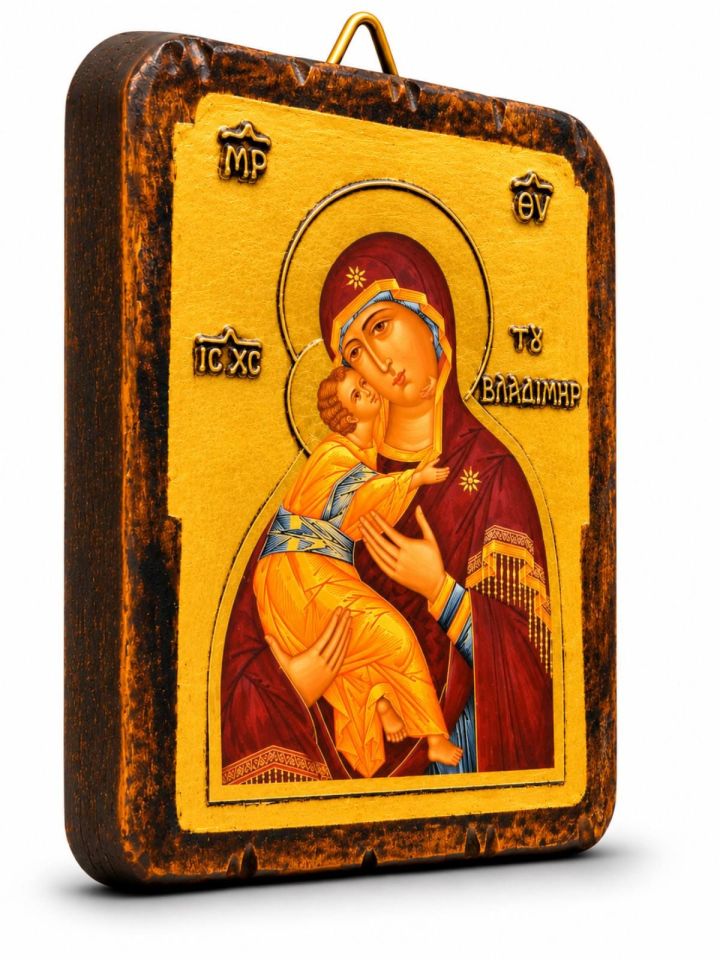
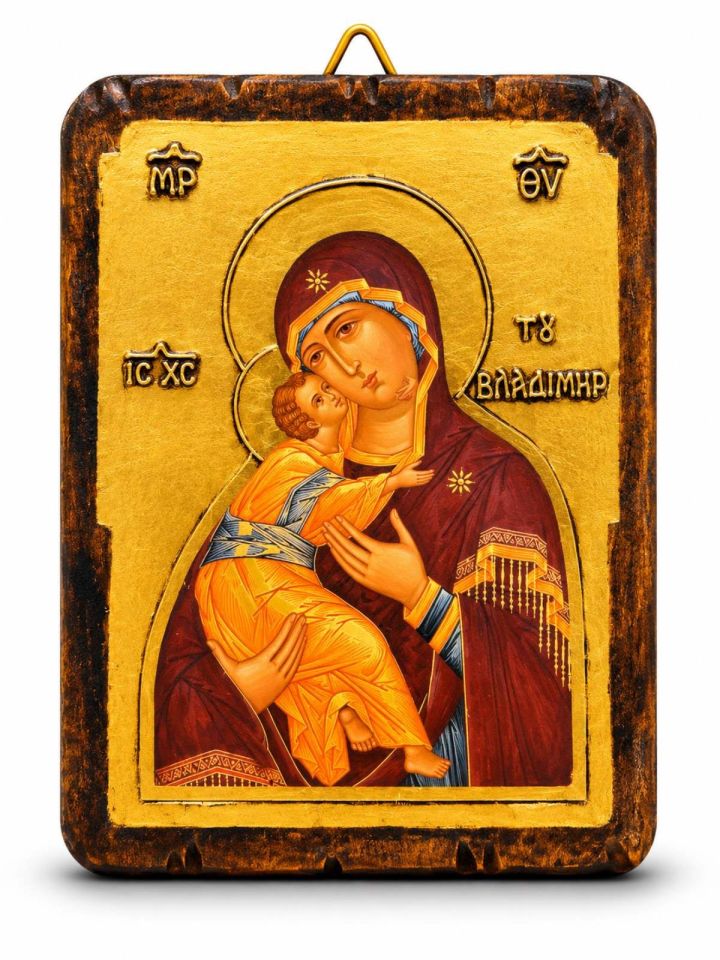
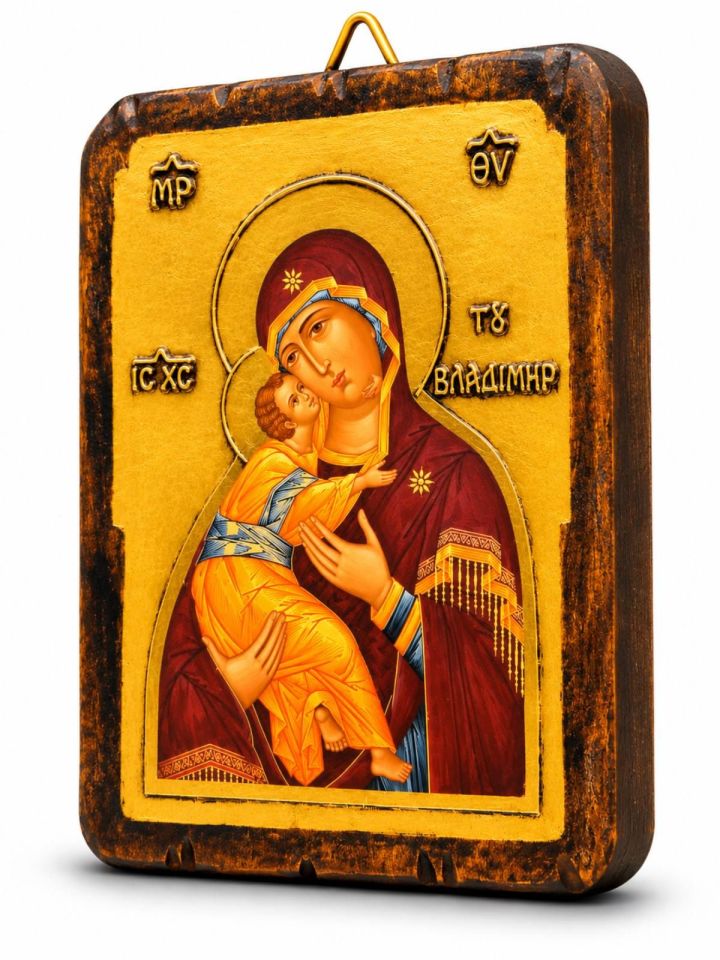
The miraculous icon of Our Lady of Vladimir is one of Russia’s best-known icons. Its ties to the Russian people go back to the earliest days of their history.
According to one tradition, it was among the icons painted by Luke the Evangelist and remained in Jerusalem until AD 450. It was then taken to Constantinople, where Patriarch Luke Chrysoberges later presented it as a gift to Prince Yuri Vladimirovich Dolgoruky. The prince placed it in a convent in Vyshhorod.
In 1155, Prince Andrei Bogolyubsky brought the icon to Vladimir, where he built a magnificent cathedral dedicated to the Dormition of the Mother of God to house it.
The icon remained in Vladimir for three centuries. Throughout that time, the Virgin Mary continued to show mercy and offer help to those who called upon her. Many miracles were attributed to the icon. It survived unscathed a fire that consumed the cathedral, escaped looting by the Tatars, and accompanied Prince Andrei in his battles against the Bulgars near the Volga.
The icon was also said to have worked miracles at other critical moments. In 1395, when the feared Timur, also known as Tamerlane, attacked Moscow, Prince Vasily Dmitriyevich and Metropolitan Cyprian had the icon carried in procession to save the city. The procession lasted ten days. On 26 August 1395, thousands of people welcomed the icon and placed it in the Cathedral of the Dormition of the Mother of God.
At that very moment, Tamerlane was asleep in his tent and had a terrifying dream. He saw many bishops descending from a high mountain, carrying golden pastoral staffs. Above them stood a woman enveloped in a shield of light. Countless angels surrounded her, wielding flaming swords. Suddenly, they charged at him. He awoke in terror and asked his advisers what the vision meant. They told him that the woman was the Christians’ Virgin Mary, the protectress of the Russian people. Tamerlane immediately decided to retreat.
Russian victories over the Tatars in the fifteenth century were also attributed to the icon. In 1480, it was permanently transferred to Moscow. In 1918, the Soviet government undertook its restoration. Conservators removed four layers of overpainting, revealing the original image once more. The icon was then taken to the Historical Museum in Moscow and later transferred to the Tretyakov Gallery, where it is kept in a chapel to this day.





Comments (0)
Your review appreciation cannot be sent
Report comment
Report sent
Your report cannot be sent